The Vanishing Act: Why Your Days Feel Shorter (And How to Reclaim Them)

H
Have you ever looked at the calendar on a Thursday and felt a genuine sense of vertigo? “Where did the week go?” It isn’t just a symptom of being busy. According to experts like Dr Andrew Huberman, the way time "speeds up" as we age is a real physical change in how we process life. From a naturopathic perspective, this "vanishing time" is often a sign that our nervous system has slipped into a low-power auto-pilot mode.
Why Your Brain "Deletes" Your Days
Think of your brain as a filmmaker. When you are young, everything is new, so the brain records every detail in high definition. As adults, we fall into the Efficiency Trap. We drive the same roads, eat the same toast, and scroll the same apps.
To save energy, your brain stops "recording" these repetitive events. It creates a compressed, blurry file. When you look back at your week, your brain sees a blank space, making you feel as though the time never happened at all.
Moving from "Auto-Pilot" to "Vitality"
When our days disappear, it’s usually because we are stuck in a "fight-or-flight" loop—rushing through life instead of inhabiting it. To slow down the clock, we must give our brains a reason to hit the "record" button again.
Here are three practical ways to stretch your time this week:
The Power of "Tactile Novelty"
The brain only pays attention when tasks are fresh and engaging. One of the best ways to wake up your mind is through "tactile" hobbies—activities that require hand-eye coordination and a bit of focus.
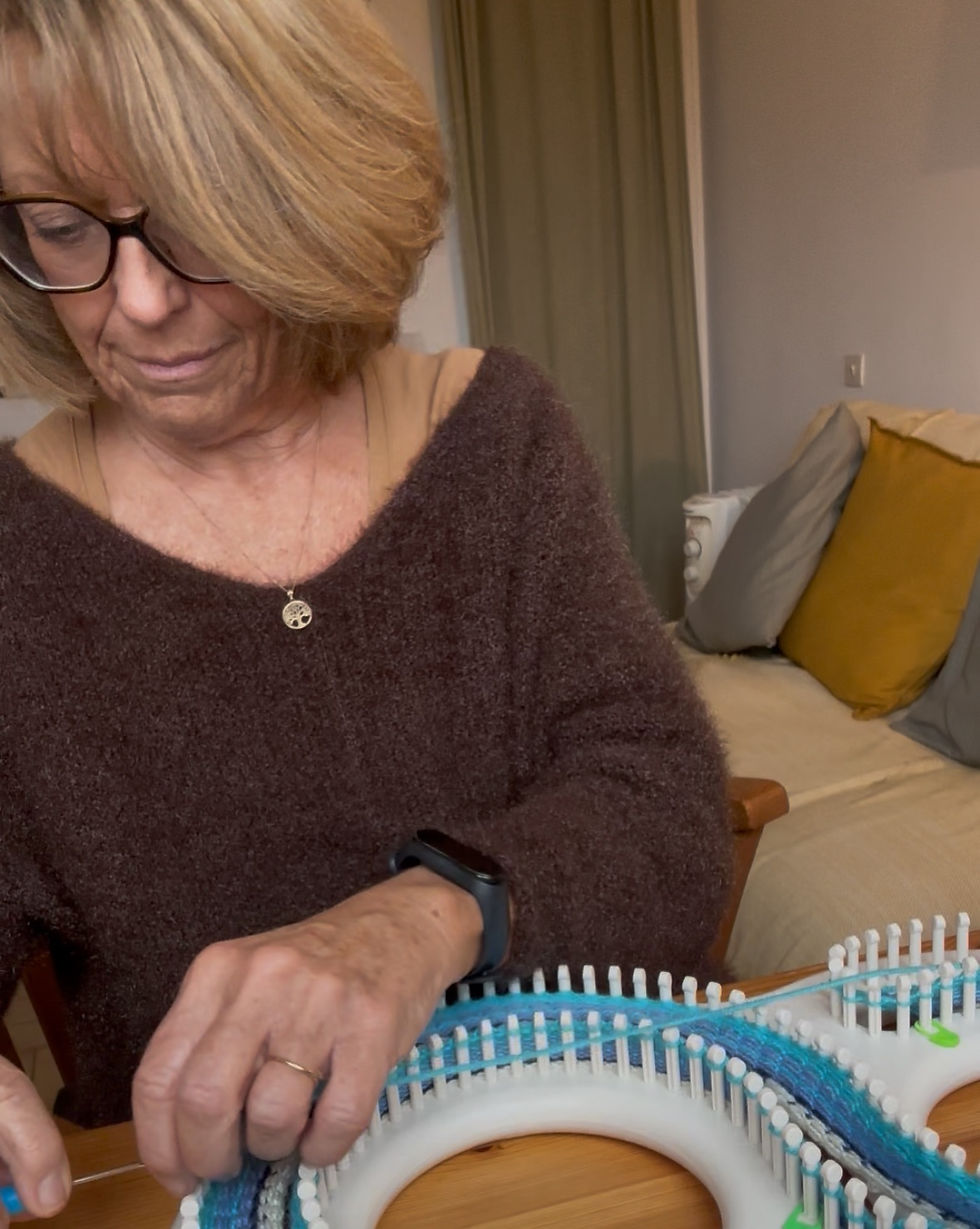
The Practice: Take up a craft that requires rhythmic, deliberate movement. A year ago, I started loom knitting, and it fundamentally changed how I experience my evenings.
The Practical Tip: In the photo attached this blog, you’ll see me using an S-loom. It isn’t just about the blanket; it’s about the "micro-decisions" the brain makes with every stitch.
Try this: Spend just 15 minutes a day on a manual skill (knitting, sketching, or even complex food prep). This switches your brain from "low-power mode" to "active mode."
The "Time-Thickening" Technique
Time feels "thin" when we are stuck in our heads worrying about the future. To "thicken" your experience of a moment, you need to pull your awareness back into your physical body.
The Practice: Use the 5-4-3-2-1 Sensory Grounding method.
5 things you can see (the texture of the wall, the light on the floor).
4 things you can touch (the soft wool on a loom, the cold glass of a window).
3 things you hear (the hum of the fridge, a bird outside).
2 things you smell.
1 thing you can taste.
The Result: This simple ritual breaks the "time-blur" and signals to your nervous system that you are safe and present.
Anchor Your "Dopamine Clock"
Your internal sense of time is heavily influenced by dopamine. If your dopamine levels are erratic (often caused by "infinite scrolling" first thing in the morning), your perception of time will feel fragmented and rushed.
The Practice: The "No-Screen Thirty." Avoid your phone for the first 30 minutes of the day. Instead, get natural sunlight in your eyes as soon as possible.
The Practical Tip: Open the back door or stand by a window while the kettle boils. This sets your circadian rhythm and stabilises your dopamine, making your morning feel expanded rather than a frantic race.
The Takeaway
Your days aren't disappearing because you’re getting older; they’re disappearing because they’ve become predictable.
To get your time back, give your brain something new to look at. Whether it’s picking up a knitting loom or simply taking a different street on your morning walk, the secret to a "longer" life is simply paying more attention to the one you have.
References
• Huberman, A. (2021). Huberman Lab Podcast.
• Eagleman, D. (2011). Time Perception Research.


Comments